


Last Updated: October 2026
Medellín was once known as one of the most dangerous cities in the world, largely because of the violence associated with Pablo Escobar and the Medellín Cartel during the 1980s and early 1990s. Drug trafficking, bombings and murders devastated the city, leaving a painful legacy that Colombians are still dealing with today.
However, Medellín has undergone an extraordinary transformation over the past few decades. Once a city that many travellers wouldn’t have dreamed of visiting, it has become one of Colombia’s most fascinating destinations.
Nicknamed the City of Eternal Spring thanks to its pleasant year-round climate, Medellín is surrounded by beautiful green mountains and offers colourful neighbourhoods, fascinating history, vibrant street art and spectacular viewpoints.
We spent ten days exploring Medellín in 2019, including a week of Spanish lessons, and discovered a city full of character, resilience and welcoming people.
From riding cable cars above the city to exploring Comuna 13, joining walking tours and hiking to beautiful viewpoints, there are plenty of things to do in Medellín.
Here are our favourite experiences, along with practical tips to help you plan your visit.
We visited Medellín in 2019. This article reflects our personal experiences at the time, while the practical travel information has been updated for 2026. As security conditions in Colombia can change, always check the latest advice before travelling.

- What to do in Medellín?
- 1- Take a free city tour
- 2- Take a cable car up to Park Arvi
- 3- Admire Botero’s work
- 4 – Relax in the Botanical Gardens
- 5- Hike the Cerro de las Tres Cruces at sunrise
- 6 Take a tour of Comuna 13
- 7- Pay your respects at San Antonio Park
- 8- Learn Spanish
- 9- Visit el Museo Casa de Memoria
- 10- Go shopping!
- 11- Take a day trip to Guatapé
- Is Medellín Safe?
- Best Time to Visit Medellín
- How Many Days Do You Need in Medellín?
- Where to Stay in Medellín
- Where to eat in Medellín?
- Where to Go Out in Medellín
- How to Get to Medellín
- How to Get Around Medellín
- Should you take a Pablo Escobar tour?
- Explore More of Colombia
What to do in Medellín?
1- Take a free city tour
Our favourite thing to do in Medellín was the three hours long, free city tour with Real City Tours. This tour runs three times daily from the Alpujarra Metro Station. It’s the best thing to do if you want to learn about Medellín’s history as well as learn about the best sights in El Centro.
Our guide Dio was wonderful. Not only did he remember the name of every single person on the tour (there were at least 30 of us), but he told us lots of stories from his childhood to help us understand the struggles Medellín has gone through. We learnt a lot about Medellín’s past and present and it was a great introduction to the city.
There are many free tours available in Medellín but look no further, this one is the best!

2- Take a cable car up to Park Arvi
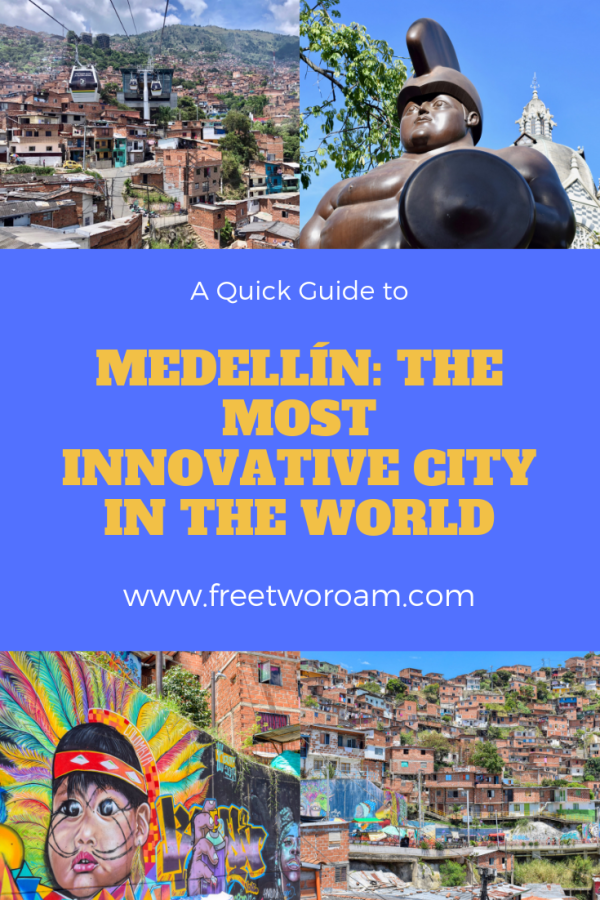
Getting to Parque Arví is half the fun, thanks to Medellín’s fantastic cable car system. The views along the way are some of the best you’ll find in the city!
The first cable car takes you high above Medellín’s colourful neighbourhoods, with spectacular views stretching across the valley. The second, longer ride carries you over beautiful green forests before arriving at Parque Arví.
Once at the park, you can explore its woodland trails and enjoy the peaceful natural surroundings. However, we recommend joining an organised guided walk rather than exploring the trails independently, as some areas are isolated and security remains a consideration. Guided walks are available from the visitor centre near the cable car station, with prices starting at approximately COP 30,000 for international visitors.
There’s also a small market near the entrance where you can browse local handicrafts, buy souvenirs or enjoy some delicious fresh fruit.
Our tip: Parque Arví and the tourist cable car are generally closed on Tuesdays, so check opening times before visiting. You can find the latest information on the official Parque Arví website.


3- Admire Botero’s work
Fernando Botero is a Medellín artist and sculptor renowned for his rather weird statues of oversized and disproportionate people. The best place to admire his work is Plaza Botero where 23 of his sculptures are on display. Plaza Botero is a busy part of town which is always crowded, so keep a good eye on your belongings.

Right next to the Plaza is the Museum Antioquia. Inside this museum are 100 pieces of artwork donated by Botero himself. Some are his pieces, while others are from his private art collection. This is Medellín’s most popular museum.

4 – Relax in the Botanical Gardens
If you need a break from the hustle and bustle of Medellín, head to the beautiful Jardín Botánico, a peaceful green oasis in the middle of the city.
Covering approximately 14 hectares, the gardens are home to thousands of plants and flowers, numerous bird species, butterflies and, my personal favourites, the iguanas!

Entrance to the Botanical Gardens is generally free, although special exhibitions and events may require a ticket.
We visited during Medellín’s famous Feria de las Flores (Flower Festival) and paid COP 16,000 each to enter. However, the spectacular floral displays were definitely worth the entrance fee!
If you’re visiting during the festival, be aware that parts of the gardens may close temporarily while exhibitions are being prepared or installed. Check opening arrangements before your visit..

5- Hike the Cerro de las Tres Cruces at sunrise
If you enjoy a good workout first thing in the morning, this hike will do the trick. But start early for two reasons. Firstly, Medellín gets crazy hot during the day and this hike does not have much shade. Secondly, because you can watch the sunrise from the top and it’s definitely worth seeing! Many local people do this hike as their daily exercise, so you may feel rather unfit as you see them running up it in less than fifteen minutes when it takes you over half an hour! But don’t worry, just take your time and enjoy the views.

6 Take a tour of Comuna 13
Comuna 13 is the best place to learn about the transformation Medellin has undergone over the last ten years. Not that long ago, Comuna 13 was the most violent neighbourhood in the most dangerous city in the world! Back then, you wouldn’t have dared to try to enter it if you didn’t live there. It was full of invisible borders where you could be shot for trespassing!


But after a set of six electric escalators were built to give the community better access to the city, things began to change for the better. Combined with a new focus on art, creativity, and education, the neighbourhood has been completely transformed.

Comuna 13’s street art is bringing so much tourism to the area that the neighbourhood is now safe to visit during the day (but not at night). You can visit alone but we’d recommend taking a graffiti tour with one of the locals. You’ll learn so much more about the neighbourhood and the stories behind its street art.


7- Pay your respects at San Antonio Park
Although there isn’t much to see in San Antonio Park, two things stand out. They are two identical metal bird sculptures by the artist Botero. One of them is mangled, blown to pieces by a political group during a concert in 1995. The other is a replica which Botero donated while asking for the damaged sculpture to remain. This was to show how the city can and will transform into peace, which it is doing. Twenty people died during the attack, with many more injured.

8- Learn Spanish
If you are going to be in Colombia or South America for a while, having some basic Spanish will be very helpful. There are many schools to learn Spanish at in Medellin and it’s a great place to do it. We took a week of Spanish classes with Blink Spanish school. We enjoyed our time there and learned a lot. They also organise cheap accommodation for their students, either in dorm-style or private rooms.
9- Visit el Museo Casa de Memoria
This museum is dedicated to honouring the victims of armed conflicts in Medellín and Colombia. It’s another good place to go to better understand their complicated history. It’s free to enter and only about 50% of the displays are translated into English. But it’s still worth a visit.
10- Go shopping!
There are many “Centro Comercial” shopping malls in Medellín and if you enjoy shopping, you’re in luck. We mainly shopped for a camera, after having ours stolen earlier in Pasto but there are many malls where you can spend a rainy afternoon. Yes, it does rain in Medellín but never for that long!
11- Take a day trip to Guatapé
Guatapé is Colombia’s most colourful town and you simply must visit it. It’s only a two-hour bus ride away. You can either visit for the day (be sure to leave early) or spend a couple of days there as we did. Guatapé is loved by tourists and locals alike due to its beautiful scenery and colourful streets and squares. The town centre is packed with restaurants and shops.

Also, no visit to Guatapé is complete without climbing El Peñon. El Peñon is a natural phenomenon just outside the town. This huge rock is tough to climb but the view from the top is well worth the effort!
Looking for the perfect day trip from Medellín? Don’t miss colourful Guatapé, famous for its brightly painted houses and the spectacular views from the top of El Peñol Rock. Discover how to visit in our Guatapé travel guide!

Is Medellín Safe?
That’s the question everyone asks! Medellín’s reputation from the Pablo Escobar era still makes some travellers nervous, but the city has changed enormously since those dark days.
However, that doesn’t mean Medellín is without its problems. Robberies, pickpocketing, drink spiking and other crimes still occur, and visitors need to take precautions.
We spent ten days in Medellín in 2019 and enjoyed our time there, but we were always mindful of our surroundings.
Here are some important safety tips for visiting Medellín:
- Avoid walking around at night, particularly in unfamiliar or quiet areas. Use reputable taxis or ride-hailing services instead.
- Ask locals which neighbourhoods to avoid. Stick to well-established tourist areas and don’t wander into unfamiliar neighbourhoods without local guidance.
- Keep your belongings secure. Watch your bags in crowded places, on public transport and around popular attractions.
- Remember “No dar papaya”! This popular Colombian saying essentially means don’t make yourself an easy target. Avoid displaying expensive jewellery, cameras, phones or large amounts of cash unnecessarily.
- Be careful when withdrawing money. Use ATMs inside banks or shopping centres, preferably during daylight hours.
- Watch your drinks. Drink spiking and drug-assisted robberies are serious concerns in Medellín. Never leave drinks unattended or accept drinks from strangers.
- Be cautious when meeting people online. Criminals have targeted visitors through dating apps and arranged meetups. Avoid inviting strangers to your accommodation or going somewhere isolated with someone you’ve just met.
Our advice: Medellín is a fascinating city with so much to offer, but don’t assume that tourist neighbourhoods are completely risk-free. Stay alert, listen to local advice and check current security conditions before travelling.
Despite its challenges, we loved discovering Medellín and meeting the friendly people who call it home.

Best Time to Visit Medellín
Medellín is nicknamed the City of Eternal Spring, thanks to its pleasant temperatures throughout the year, generally ranging from 22°C to 28°C during the day.
The drier months, December to February and June to August, are generally the best times to visit. March to May and September to November tend to be wetter, although rain showers are possible year-round.
One of the most exciting times to visit is during the Feria de las Flores (Flower Festival), usually held in August. We were lucky enough to experience the festival during our stay, and it’s a wonderful celebration of Medellín’s culture, flowers and traditions.

How Many Days Do You Need in Medellín?
We recommend spending at least three to four days in Medellín to explore its main attractions, including Comuna 13, the historic centre, the Botanical Gardens and Parque Arví.
If you’re planning a day trip to colourful Guatapé, allow an extra day.
We spent ten days in Medellín, including a week of Spanish lessons, which gave us plenty of time to explore the city at a more relaxed pace.

Where to Stay in Medellín
Choosing the right neighbourhood is important when visiting Medellín. We recommend El Poblado or Laureles, two popular areas with plenty of restaurants, cafés and accommodation options.
Here are three hotels to suit different budgets:
Budget – 574 Hotel
Located in a quieter part of El Poblado, 574 Hotel is a small, welcoming boutique hotel offering comfortable rooms and breakfast. It’s a great option for travellers wanting an affordable stay without being right in the middle of the nightlife.
Mid-Range – Hotel Vivre
Situated in Laureles, Hotel Vivre offers modern, comfortable rooms, an on-site restaurant and a convenient location near cafés and local eateries. A good choice if you prefer a more residential neighbourhood.
Boutique – Landmark Hotel Medellín
For a little extra comfort, Landmark Hotel is a stylish property in the Manila neighbourhood of El Poblado. It features contemporary rooms, a rooftop swimming pool and lovely city views, with plenty of restaurants and coffee shops nearby.
Our tip: Whichever neighbourhood you choose, use reputable taxis or ride-hailing services when returning to your hotel late at night.If none of those are available or take your fancy, try using the search box below:

Where to eat in Medellín?
Mondongo’s
Head to Mondongo’s to taste traditional Colombian food. There you can try the speciality of Medellín, the Bandeja Paisa. Just make sure you are hungry as it’s massive!
Mercado Del Rio
This market is more like a food court. It has all sorts of food from around the world, as well as bars and a couple of wine bars. It’s a great place to go for dinner or to hang out with friends. Many locals do just that, so it’s busy in the evening and especially at weekends.
Hacienda Origen
Another great place to try very typical Colombian and South American dishes. Authentic atmosphere and food. There are a few branches around town.
Lavocaderia
If you love avocado like me then this place is totally for you. It’s avocado heaven! Everything is loaded with avocado. They even have avocado cocktails!

Where to Go Out in Medellín
Medellín is famous for its lively nightlife, with plenty of bars, rooftop terraces, salsa clubs and late-night entertainment.
The main nightlife areas are Parque Lleras and Provenza in El Poblado, where you’ll find trendy cocktail bars, restaurants and clubs, and La 70 (Carrera 70) in Laureles, which offers a more local atmosphere with plenty of salsa and Latin music.
We aren’t big partygoers ourselves, but if you enjoy a night out, Medellín certainly has plenty to offer!
Safety tip: Be particularly cautious after dark. Keep an eye on your drinks and belongings, and use reputable taxis or ride-hailing apps to return to your accommodation.

How to Get to Medellín
Medellín is well connected to the rest of Colombia by air and road, making it an easy addition to your Colombia itinerary.
By plane: Medellín has two airports. José María Córdova International Airport (MDE) handles international flights and most major domestic routes. It’s located in Rionegro, approximately 35 kilometres from the city, with the journey taking around 45–60 minutes depending on traffic.
The cheapest way into Medellín is by airport bus, with services to locations including San Diego. Alternatively, you can take an authorised airport taxi or arrange a private transfer.
Olaya Herrera Airport (EOH) is located within Medellín itself and mainly handles smaller regional domestic flights. Always check which airport you’re flying into!
By bus: Medellín has two main bus terminals: Terminal del Norte, serving many destinations to the north and east, and Terminal del Sur, serving destinations including Cali, Armenia, Pereira and Salento.
We travelled overland from Salento to Medellín, a journey that took us approximately eight hours. Direct buses still operate between the two destinations with Flota Occidental, generally taking around 7–9 hours depending on road conditions.
Our tip: For long-distance bus journeys, choose established operators and travel during daylight hours where possible. Road conditions and security situations can change, so check current information before travelling.

How to Get Around Medellín
Use the Metro! Medellín has Colombia’s only metro train system, and the locals are incredibly proud of it, for good reason. It’s efficient, affordable and easy to use!
The network includes two main train lines, a tram, several Metrocable lines and integrated buses, making it easy to reach most attractions.
Most cable cars are included in the regular Metro fare, but Line L to Parque Arví requires a separate ticket.
We mainly used the Metro during our stay and found it extremely convenient. Just keep an eye on your belongings during busy periods.
For places not easily reached by Metro, taxis and ride-hailing services are good alternatives.
Should you take a Pablo Escobar tour?
Now if you’ve watched the Netflix series Narcos and wonder if you should go on a Pablo Escobar tour, the answer is no. The locals hate the series and are upset that people want to go on this tour.
In fact, the locals don’t even want to say his name and some only refer to him as “that guy”. Why should people idolise a person who’s caused so much grief and hell in their lives? Of course just because you take the tour doesn’t mean you idolise the guy. But anyway, if you want to find out more about what happened, you’re better off visiting the Museo Casa de Memoria or taking one of the tours we mentioned earlier.
You’ll learn a lot more about what happened. What you see in Narcos is far from reality. We were told that only about half of it is true and the rest is fiction, created to keep people entertained.

Explore More of Colombia
Discover Bogotá: Colombia’s bustling capital surprised us with its incredible street art, colourful historic neighbourhoods and fascinating museums. Find out why it’s worth visiting in our Bogotá travel guide.
Explore Colourful Cartagena: Head to Colombia’s Caribbean coast to discover beautiful colonial architecture, vibrant street art and the charming streets of Getsemaní. Take a look at our Cartagena photo essay and travel guide.
Read More
Why You Should Visit Cali, Colombia
Hiking the Cocora Valley, Colombia


[…] trip to Medellín would be complete without spending some time in Guatapé, Colombia’s most colourful town. Guatapé […]
[…] Medellín: A Guide to the Most Innovative City in the World […]
[…] was all about Colombia. At the end of July, we’d just finished ten days in Medellin. We were heading up to the north of the country, to explore the Caribbean coast. But before that, […]
Great article about my hometown Medellin. It’s a beautiful city to visit. Thank you for taking the time to inform people about the present of a city that has transformed in the best way and something you forgot to mention is that the people of Medellin are very kind and hospitalitaries.
Hi Mauricio, I am glad you enjoyed the post and you are so right, Colombian people are very kind and super friendly. Some of the friendliest people we’ve met in our travels so far.
[…] known as the city of eternal spring, has a lot to offer to tourists with its mix of stunning nature, lively culture, and pleasant […]