


Australia is home to some of the most extraordinary wildlife on the planet. After more than two decades exploring this country, spotting animals in their natural habitat is still one of my greatest travel pleasures. It doesn’t matter how many koalas or kangaroos I’ve seen, I still get ridiculously excited and reach for my camera!
From swimming with turtles on the Great Barrier Reef to watching cassowaries wander through tropical rainforest, every encounter feels special. Some just require a little more patience than others. It took me over 20 years to see my first wild platypus, so my advice is simple: never give up!
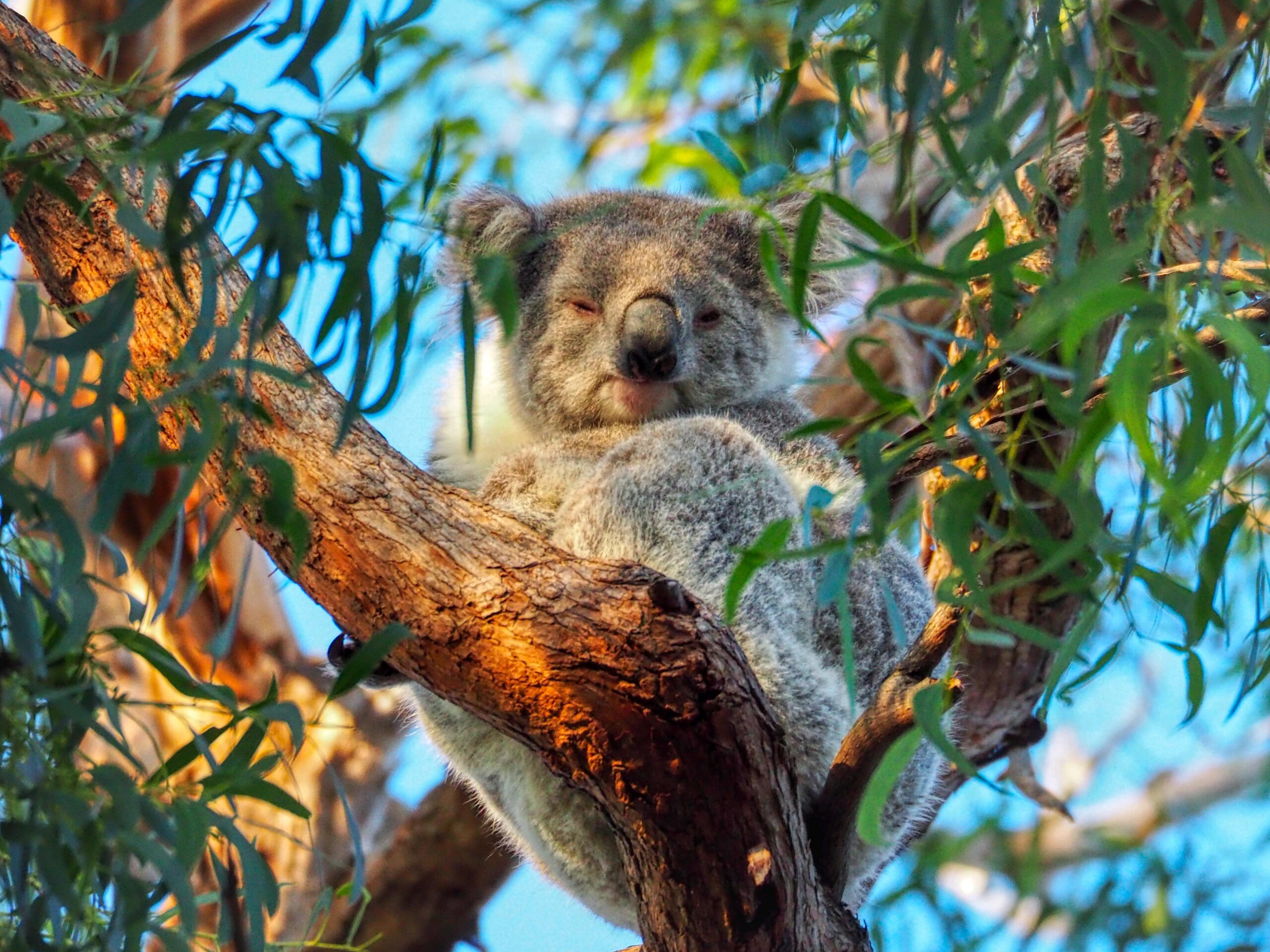
1. Koalas – Australia’s Sleepy Tree Dwellers
There’s something special about finding a koala curled up in a eucalyptus tree. Their grey fur blends into the branches so well that you can walk right underneath one without noticing.
We’ve spotted wild koalas across Australia, but four places stand out:
- Kangaroo Island, South Australia: A fantastic all-round wildlife destination, with koalas, kangaroos, wallabies and echidnas.
- Kennett River, Victoria: A worthwhile koala-spotting stop along the Great Ocean Road, where we’ve had excellent sightings.
- Raymond Island, Victoria: Take the short ferry from Paynesville and follow the Koala Trail through the eucalyptus trees. We’ve had wonderful encounters here.
- Boat Mountain Conservation Park, Queensland: One of our most successful spots, with multiple koalas sighted on our visits and far fewer crowds than better-known destinations.
We’ve also spotted koalas on Magnetic Island, North Stradbroke Island and, more recently, at Clear Mountain near Brisbane.
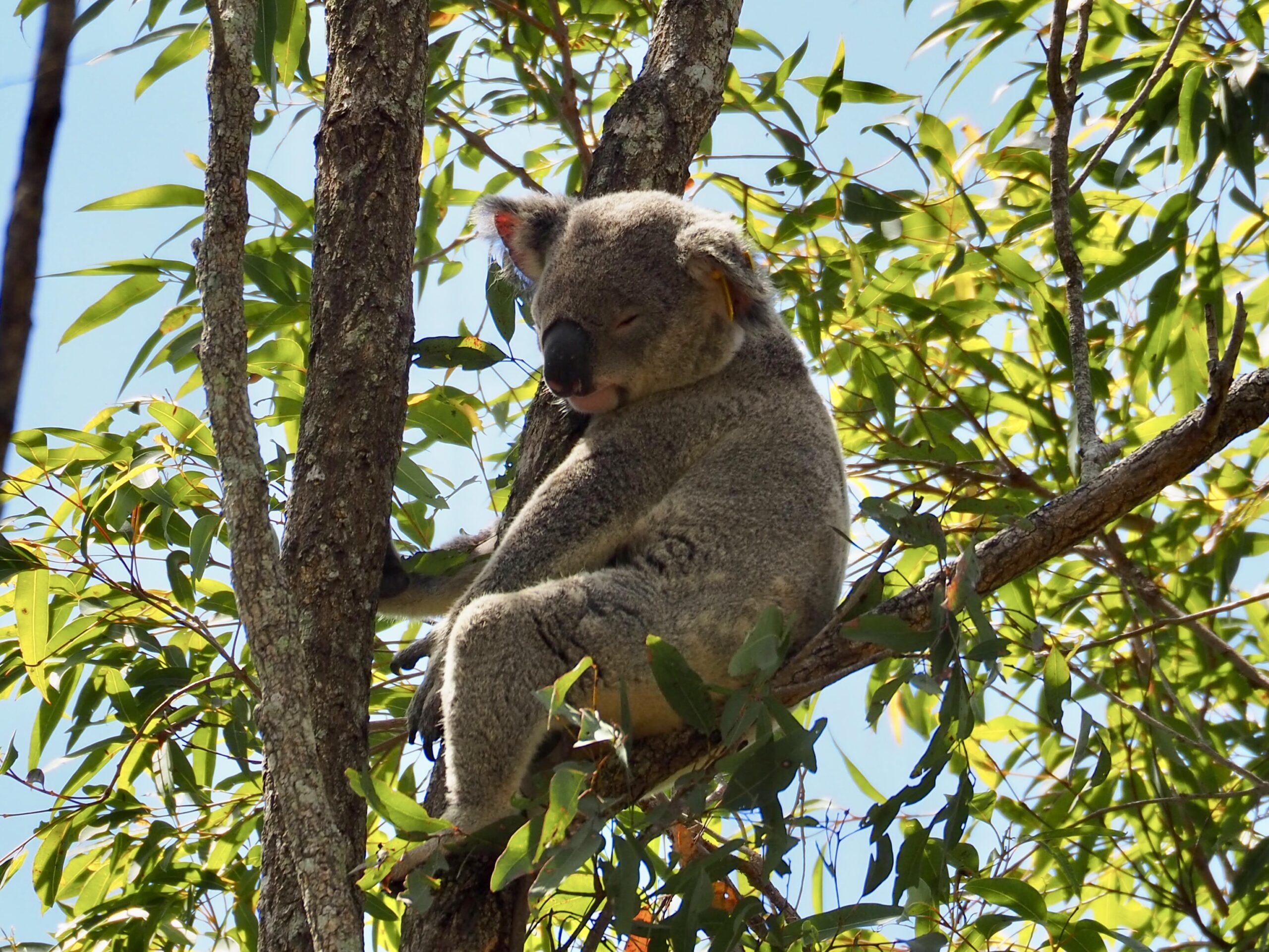


Spotting tip: Scan the forks of eucalyptus trees for rounded grey shapes. Koalas spend much of the day sleeping, so you don’t have to visit at dawn, just look carefully and keep your distance.
For more detailed locations, see our guides to Raymond Island and the best places to see koalas in the wild in Queensland.

2. Wombats – Australia’s Fluffy Bulldozers
With their round bodies, short legs and adorable waddling walk, wombats are impossible not to love! They spend much of their time in burrows but often emerge to graze around dawn and dusk. In cooler weather, particularly in Tasmania, you may see them during the day.
Where to look:
- Cradle Mountain, Tasmania: The grassy areas around Ronny Creek are among our favourite places to see wild wombats.
- Tamar Valley, Tasmania: Another area where we’ve encountered these wonderful little animals.
- Maria Island, Tasmania: Well known for wombats grazing around its open fields and walking tracks.
- Wilsons Promontory, Victoria: Look around the grassy areas near Tidal River, especially towards evening. We’ve had lovely sightings here.

Spotting tip: Watch open grassy areas beside bushland, stay quiet and let the wombats graze undisturbed. Cradle Mountain and Wilsons Prom are especially appealing if you love hiking as much as wildlife.

3. Kangaroos and Wallabies – Australia’s Famous Locals
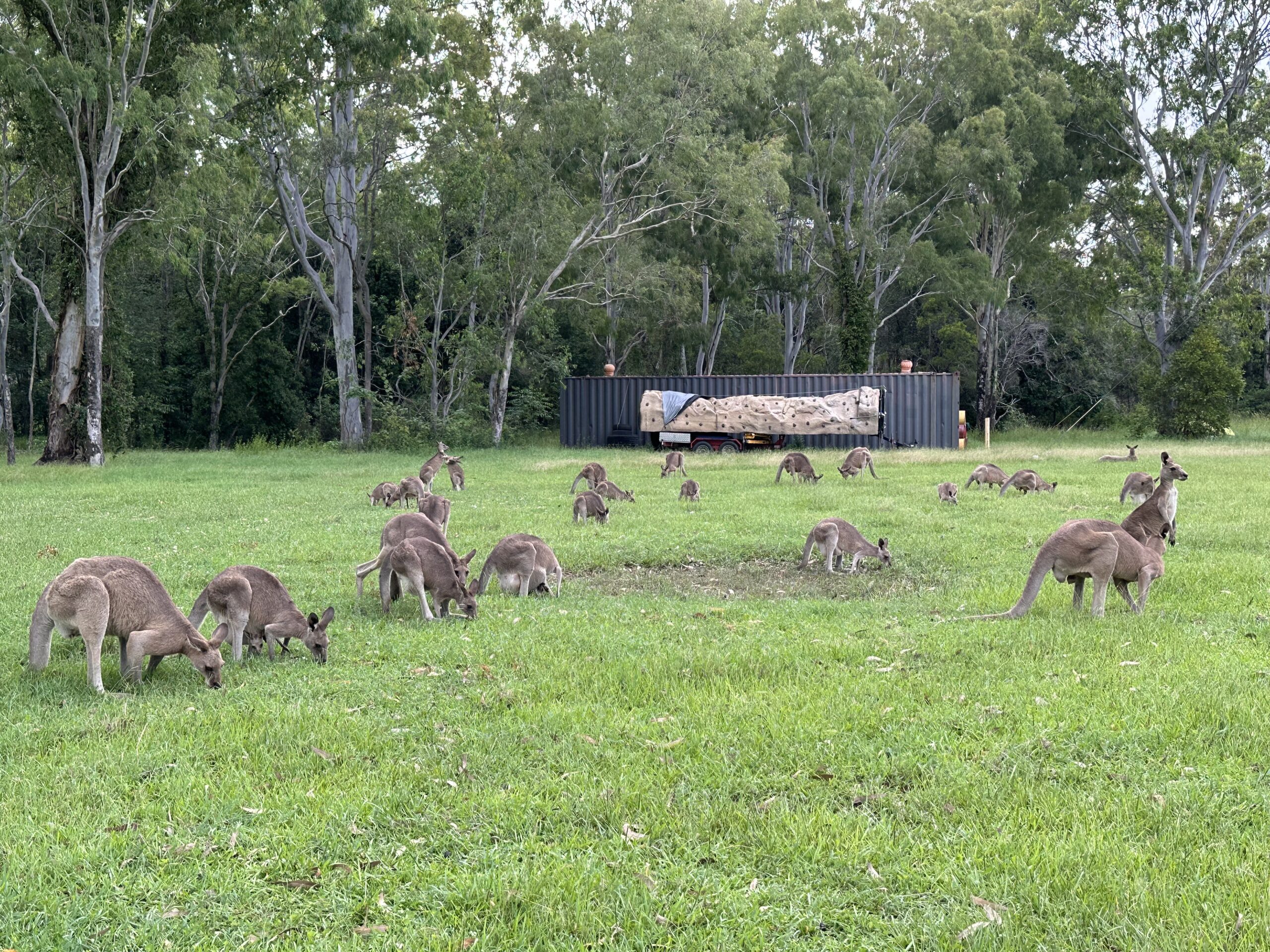
You can’t write about Australian wildlife without kangaroos and wallabies! Thankfully, they’re among the easiest native animals to see, from national parks and remote countryside to places surprisingly close to home.
We even have eastern grey kangaroos around Buderim on the Sunshine Coast. We’ve seen them near a local roundabout, almost collided with one on the road, and my former boss had them visiting her backyard!
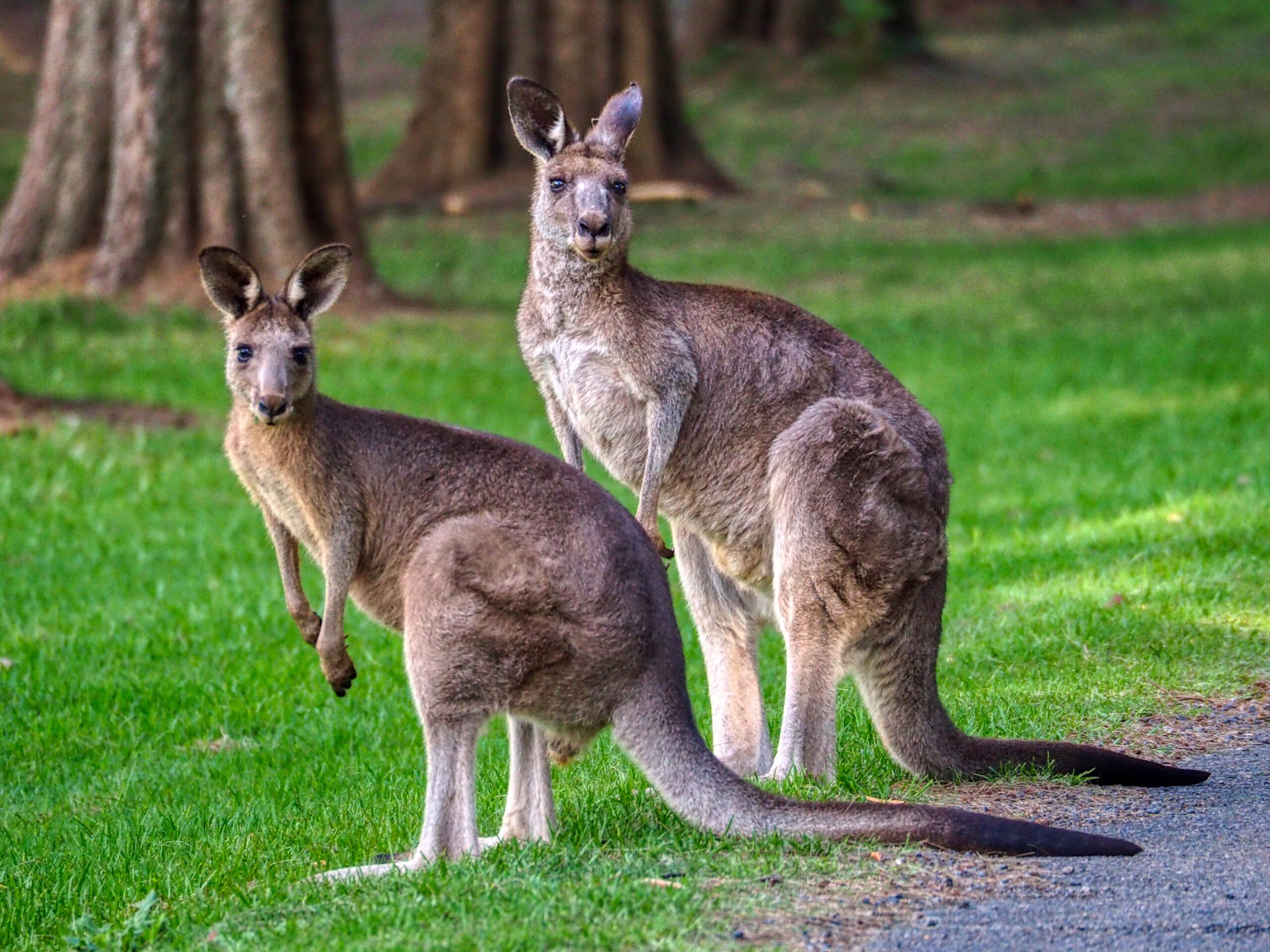
Where to look:
- Kangaroo Island, South Australia: One of our favourite destinations for seeing kangaroos and wallabies roaming freely.
- Cape Hillsborough, Queensland: Famous for kangaroos and wallabies on the beach at sunrise. It’s photogenic, but bear in mind that the regular ranger-managed feeding makes it a more predictable encounter than stumbling upon animals naturally.
- National parks and rural Australia: Often all you need is a quiet walk or country drive, especially early or late in the day.

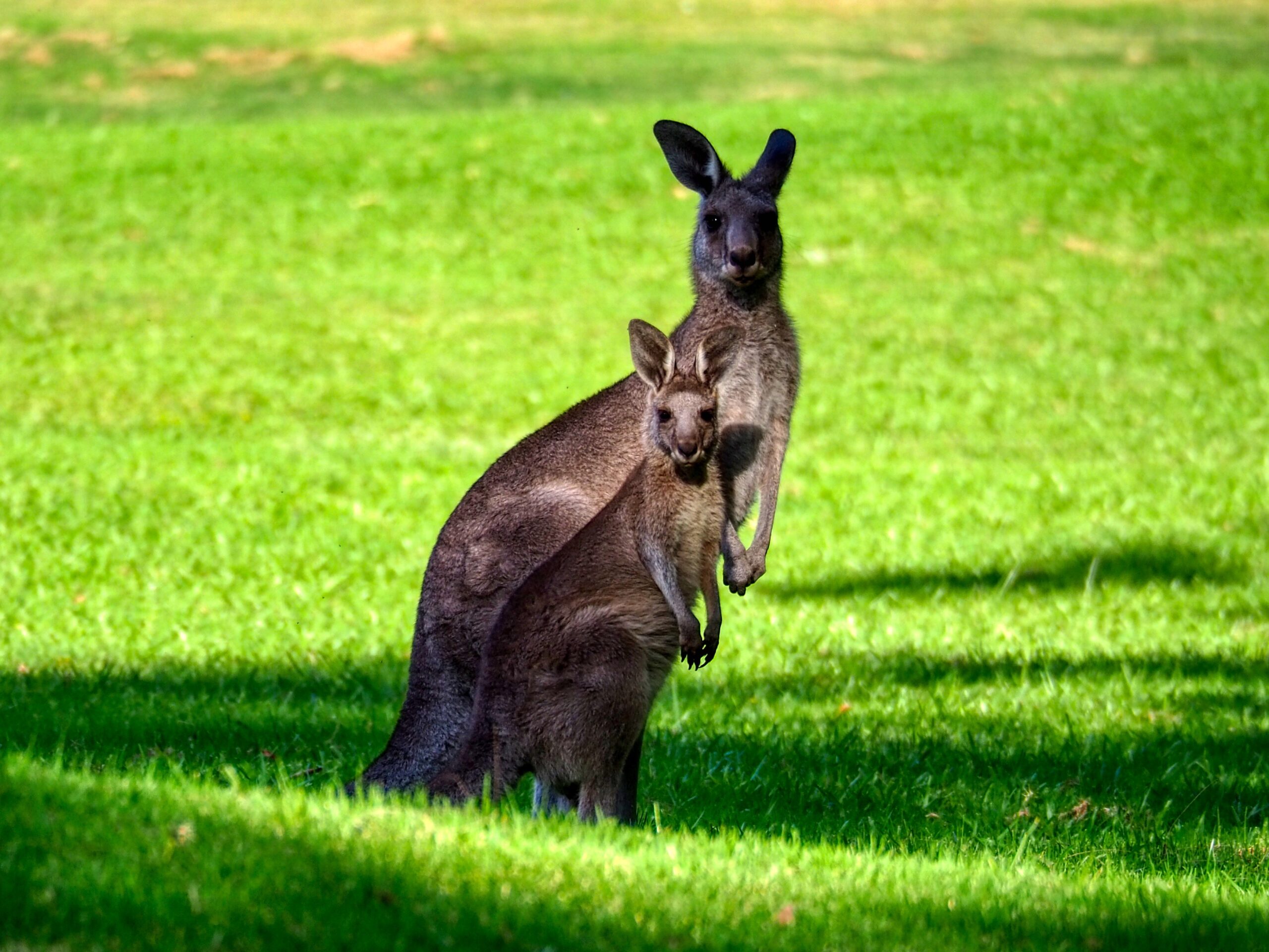

Spotting tip: Look for grazing animals at dawn and dusk, and take extra care driving at those times. Never feed them or approach mothers with joeys.
4. Platypuses – Australia’s Most Elusive Little Creatures
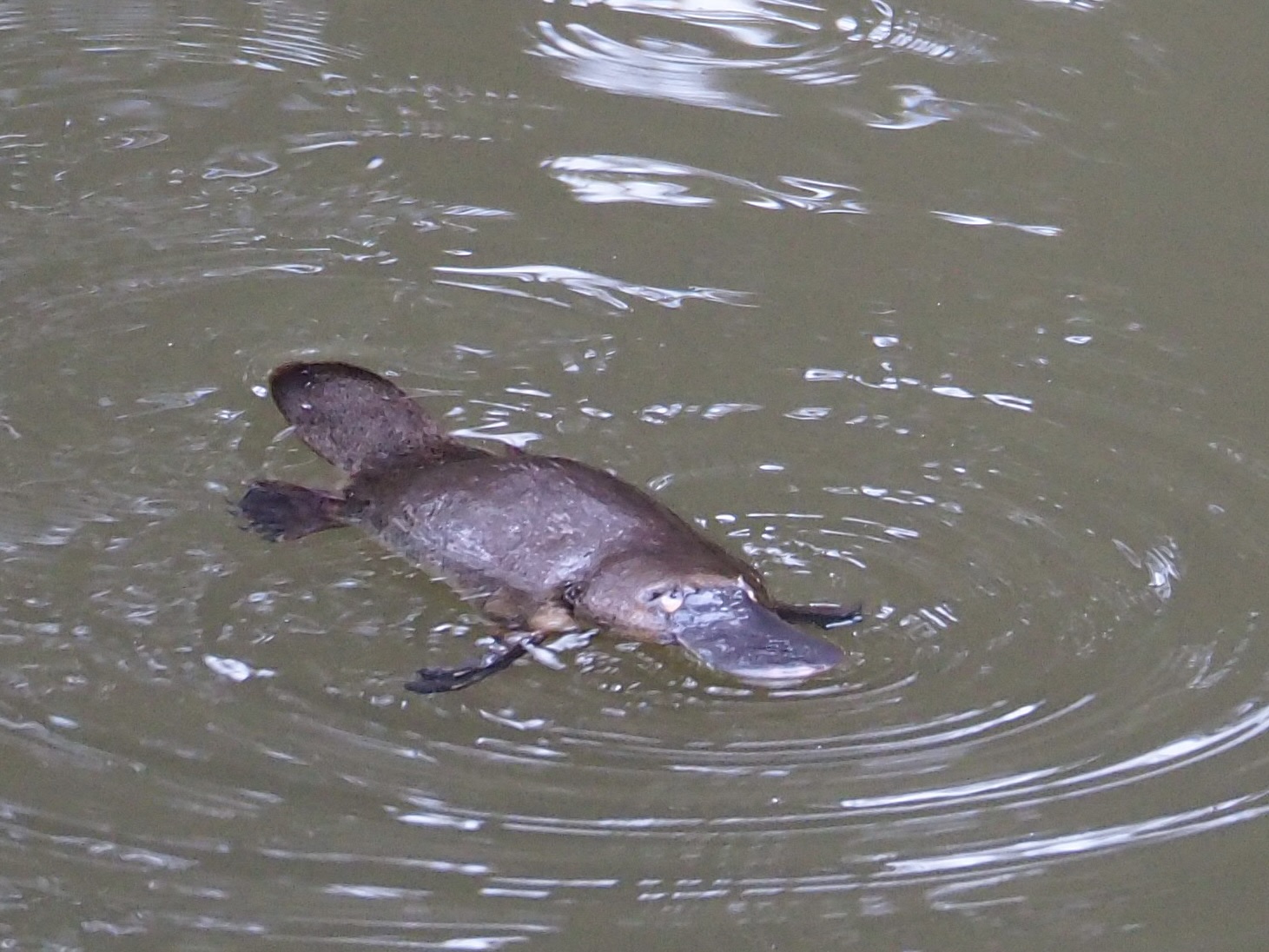
Of all the Australian animals I wanted to see, the platypus tested my patience the most. For over 20 years I searched creeks and rivers, often in places supposedly famous for platypuses, and went home disappointed.
Then I finally saw one, followed by two more in the same year! Unfortunately, my camera wasn’t ready for the first two. By the third sighting, in Maleny on the Sunshine Coast, I’d learnt my lesson. 😂
Where we spotted them:
- Broken River, Eungella National Park, Queensland: A well-known platypus habitat with viewing platforms.
- Carnarvon Gorge, Queensland: A spectacular hiking destination where a platypus sighting was an unexpected bonus.
- Maleny, Sunshine Coast: Our most recent encounter, and the one I finally managed to photograph.
Spotting tip: Go early or late, find a quiet place overlooking the water and wait without making sudden movements. Watch for ripples and a small dark shape surfacing. Even in prime habitat, sightings are never guaranteed — but don’t give up!

5. Quokkas – Australia’s Happiest-Looking Animals
Surely the award for Australia’s happiest-looking animal goes to the quokka! I first saw these adorable little marsupials on Rottnest Island in Western Australia in my twenties, long before the famous quokka selfie became a social media obsession.
Where to see them: Rottnest Island, just off Perth, is the most accessible and famous place to encounter wild quokkas. You’ll often see them around the settlement, but exploring quieter parts of the island is much more rewarding. The beaches and cycling trails are worth the trip in their own right.
Spotting tip: Quokkas can be curious and may approach people, but never feed, touch or pick them up. Let them carry on with their day rather than chasing the perfect selfie.

6. Echidnas – Australia’s Spiky Wanderers
Echidnas are among Australia’s most fascinating animals. Along with platypuses, they’re one of the few mammals that lay eggs, and there’s something wonderfully endearing about watching one shuffle through the bush searching for ants and termites.
We’ve come across wild echidnas by chance on Kangaroo Island and in Tasmania, including one crossing a road! They live in a wide range of Australian habitats, so you don’t necessarily need a specific wildlife hotspot to see one.
Spotting tip: Keep your eyes open on bushwalks, especially near logs and leaf litter. They’re more likely to be active in daylight when the weather is cool. If one curls up or starts digging, give it space, it may be feeling threatened.

7. Cassowaries – Australia’s Rainforest Giants
The southern cassowary is one of my absolute favourite Australian birds. With its vivid blue neck, red wattles and prehistoric appearance, it looks as though it’s wandered straight out of the dinosaur age!
One of our most memorable encounters was seeing a wild male cassowary with his chicks at Etty Bay. Watching this magnificent bird and his babies in their natural habitat was extraordinary.

Best places to look in Far North Queensland:
- Etty Bay, near Innisfail: One of the best-known places for wild cassowaries, which are sometimes seen on the beach and around the rainforest. Sightings are never guaranteed.
- Mission Beach: Watch rainforest edges, quieter roads and walking trails.
- Daintree Rainforest and Cape Tribulation: Important cassowary habitat, although the dense vegetation can make them difficult to spot.
Spotting tip: Drive slowly through cassowary habitat, keep your distance and never feed or approach these powerful birds. If spotting one is a priority, Etty Bay is well worth including in your itinerary.
Read our Mission Beach and Cape Tribulation guides for more ideas in the region.

8. Emus – Australia’s Curious Outback Giants
With their shaggy feathers, long legs and curious expressions, emus are unmistakably Australian. We’ve seen wild emus around the Grampians in Victoria, although it’s been a few years since those encounters.
They’re found across much of mainland Australia, particularly in open woodland, grassland and semi-arid country. Good places to keep an eye out include the Grampians, outback Queensland and parts of Western Australia around Exmouth and Shark Bay.
One day I’d also love to visit Yaraka in outback Queensland, where the local emus became famous for their cheeky behaviour and for being banned from the pub! lol
Spotting tip: Look for emus in open country during daylight hours, and slow down if you see them near roads. They’re unpredictable and can change direction suddenly.

9. Dingoes – Australia’s Wild Dogs
With their golden coats and pointed ears, dingoes might resemble domestic dogs, but they’re wild predators and an important part of Australia’s ecosystems.
K’gari (Fraser Island), Queensland, is one of the best-known places to see them. We’ve been lucky enough to encounter wild dingoes while exploring the island, where they roam beaches, dunes and forests. Dingoes also live across large parts of mainland Australia, though they can be harder to spot.
Safety tip: Never feed, approach or attract dingoes. Secure food and belongings, follow local safety instructions and give the animals plenty of space. The best encounter is one where a dingo continues behaving naturally, undisturbed by people.

10. Sea Turtles – Our Favourite Reef Encounters
I could swim alongside sea turtles a hundred times and still get excited! Watching one glide over coral, graze on seagrass or surface for air is one of my favourite things about snorkelling in Australia.
We’ve enjoyed wonderful encounters on the Great Barrier Reef, particularly around these islands:
- Lady Elliot Island: One of our absolute favourites for snorkelling with green and loggerhead turtles, with fantastic marine life just offshore.
- Heron Island: Beautiful turtle encounters underwater, plus an important nesting beach.
- Lady Musgrave Island: A sheltered reef lagoon with excellent opportunities to see turtles while snorkelling.


But if you want to witness nesting turtles or tiny hatchlings heading for the sea, our top recommendation is Mon Repos near Bargara. Its seasonal ranger-guided encounters are a remarkable way to see this part of the turtle life cycle.
When to go: Reef turtles can be spotted throughout the year. In Queensland, nesting is generally concentrated from November to January, with hatching mainly January to March. Book Mon Repos encounters ahead of time and remember that nature doesn’t work to a schedule.
Our tip: Give swimming turtles room to breathe and move freely. At nesting beaches, follow ranger instructions and avoid lights or flash photography. For more details, read our Lady Elliot Island and Heron Island guides.

11. Humpback Whales – Australia’s Ocean Giants
Nothing quite prepares you for the sight of a humpback whale breaching. We’ve enjoyed some unforgettable encounters around Hervey Bay and closer to home on the Sunshine Coast, sometimes without even getting on a boat!
Every year, humpbacks migrate along Australia’s east coast between Antarctic feeding grounds and warmer breeding waters.
Where to watch:
- Hervey Bay, Queensland: One of our favourite whale-watching destinations. The sheltered waters near K’gari are particularly rewarding later in the season, often with mothers and calves.
- Sunshine Coast, Queensland: Scan the ocean from coastal headlands and lookouts during migration season.
- Sydney and the New South Wales coast: Plenty of excellent coastal viewpoints and seasonal boat tours.


When to go: The east-coast season generally runs May to November, with August and September particularly popular in Hervey Bay.
Spotting tip: From shore, bring binoculars and watch for blows, splashes and breaches. If booking a cruise, choose an operator that follows wildlife approach rules and lets the whales determine the encounter.

12. Manta Rays – Gentle Giants of the Reef
Swimming alongside a manta ray is almost impossible to describe. We’ve been lucky enough to encounter these graceful filter-feeders at Lady Elliot Island in Australia and in Komodo National Park, Indonesia. Watching their enormous wings move through the water never gets old.
Where to see them in Australia:
- Lady Elliot Island, Great Barrier Reef: Famous for manta rays around its reefs and cleaning stations. Encounters are possible year-round, often particularly good during the cooler months, roughly May to August.
- Coral Bay, Ningaloo Reef, Western Australia: Known for reef manta rays, with guided snorkelling trips available throughout the year.
Spotting tip: Never chase or touch a manta ray, and avoid disturbing one at a cleaning station. Give it space and let it decide whether to swim near you.
Our Lady Elliot Island guide has more about the island’s extraordinary underwater wildlife, including turtles and reef sharks.
13. Saltwater Crocodiles – Australia’s Prehistoric Predators
Few Australian animals command as much respect as a saltwater crocodile. These enormous predators inhabit northern Australia’s rivers, wetlands and coastal waters and despite their name, they’re also perfectly at home in freshwater.
We’ve seen wild crocodiles on our travels, but most of those encounters were before I became serious about wildlife photography. I’m hoping our upcoming Kakadu trip will finally give me the chance to take some decent photos!
Best places to see them:
- Kakadu National Park, Northern Territory: The Yellow Water wetlands are famous for crocodiles and birdlife. A guided wildlife cruise is a great way to observe them safely. Crocodiles also inhabit the East Alligator River around Cahills Crossing.
- Daintree River, Queensland: Guided river cruises offer opportunities to spot crocodiles on muddy banks and among the mangroves.
- Adelaide River, Northern Territory: Another well-known crocodile habitat, with boat tours operating in the area.
Safety tip: Never enter crocodile habitat waters unless authorities explicitly designate the location safe for swimming. Stay well back from the water’s edge and follow all warning signs. We prefer wildlife-focused cruises where crocodiles are observed behaving naturally rather than being encouraged to jump for food.
14. Kookaburras – The Laughing Soundtrack of Australia
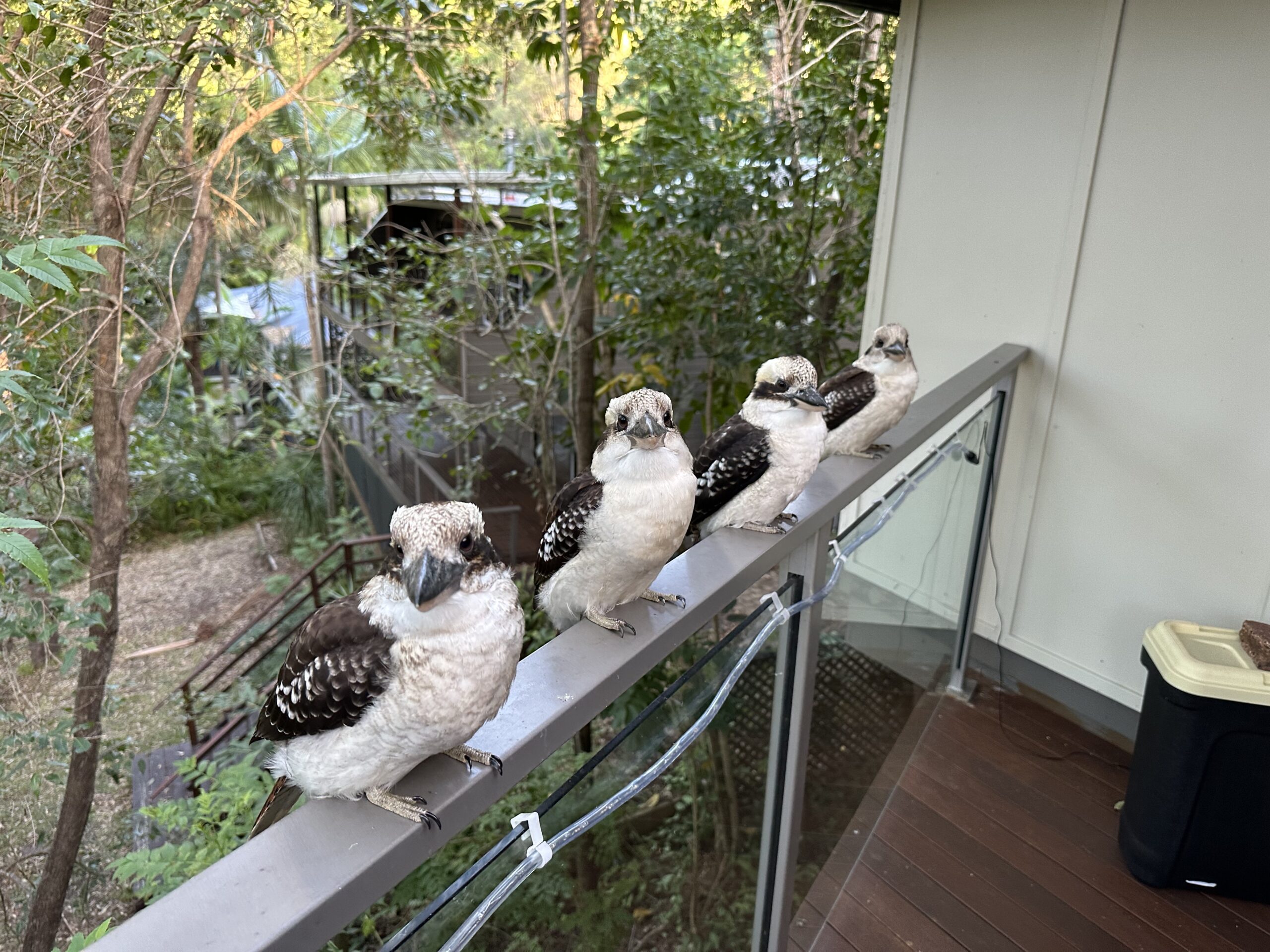
If there’s one sound that instantly reminds me of home, it’s the unmistakable laugh of a kookaburra! And one of the best places I’ve found to watch them is our own backyard in Buderim, on the Sunshine Coast.
We’re lucky enough to have these beautiful birds visiting regularly. Hearing them laugh through the trees is one of the joys of living here, except when they decide 3 am is the perfect time for a performance!
Kookaburras are members of the kingfisher family, although they’re better known for hunting insects, reptiles and other small animals than catching fish.


Where to see them: Across Australia: Laughing kookaburras are native to eastern Australia but have also been introduced to southwestern Western Australia. In northern Australia, including the Top End and Far North Queensland, you might also encounter their colourful relative, the blue-winged kookaburra.
Spotting tip: Listen for their calls around dawn and dusk, and check exposed branches or fences where they perch to watch for prey. Never feed them, however friendly they seem.
Australian Wildlife Still on Our Bucket List
Even after more than two decades exploring Australia, there are animals we’re still hoping to see in the wild:
- Whale sharks at Ningaloo Reef, Western Australia: Swimming alongside the world’s largest fish is a dream. The main encounter season around Exmouth is generally March to August.
- Tree kangaroos in the Atherton Tablelands, Queensland: These rainforest-dwelling marsupials have managed to evade us so far.
- Wild Tasmanian devils: We’ve seen them in sanctuaries, but never in the wild.
That’s one of the things I love most about Australia: however much you’ve explored, there’s always another wildlife encounter to look forward to.

Best Time to See Wildlife in Australia
There’s no single best season. For many land mammals, early morning and late afternoon offer good opportunities, while cooler weather can bring some animals out during daylight hours.
Marine encounters depend more on the species: east-coast humpbacks migrate mainly from May to November, while Queensland’s turtle nesting and hatching season falls largely between November and March. Some reef animals, including turtles and manta rays, can be encountered year-round in suitable locations.
Plan around the animals you most want to see, but leave room for surprises. Some of our favourite encounters happened when we weren’t looking for anything in particular!
Responsible Wildlife Watching in Australia
For us, seeing animals behaving naturally in their own habitat is far more rewarding than an encounter where they’re handled, fed or encouraged to perform.
Keep a respectful distance, never feed or chase wildlife, stay on designated tracks where required and take your rubbish home. Drive carefully around dawn and dusk, and choose wildlife operators that put animal welfare first.
Above all, remember that we’re visitors in their home. The best encounter is one where the animal carries on with its life, completely undisturbed by us.
FAQs About Seeing Wildlife in Australia
Where is the best place to see Australian wildlife in the wild?
It depends on the animals you’re hoping to see. Kangaroo Island is wonderful for a variety of land animals, Tasmania for wombats and echidnas, Far North Queensland for cassowaries and the Great Barrier Reef for marine wildlife.
Can you see Australian wildlife without visiting a zoo?
Absolutely! Many native animals live in national parks, forests, coastal areas and even leafy suburbs. We see kangaroos and kookaburras close to home.
Which Australian animal is hardest to spot?
Platypuses, tree kangaroos and wild Tasmanian devils can be particularly elusive. It took me more than 20 years to see my first platypus!
Is it safe to approach wild animals?
No. Observe from a respectful distance, never feed or touch wildlife, and take particular care around crocodiles, dingoes and cassowaries.


Leave a reply